
From Philly and the Pa. suburbs to South Jersey and Delaware, what would you like WHYY News to cover? Let us know!
Many residents of Philadelphia’s Port Richmond neighborhood learned about its toxic pile of rubble only after the U.S. Environmental Protection Agency started planning to remove it.
That may be because the Franklin Slag Pile, a Superfund site at the intersection of Delaware and Castor avenues, is tucked away and has been covered by a large tarp for the past 26 years.
“Even after being part of the neighborhood for [my entire life], I didn’t have a clue,” said Doris Lynch, president of Port Richmond Neighborhood Action. “When you hear about it and you learn about it, it’s like, wow. I didn’t even know it was there.”
Superfund sites are areas that have been identified by the EPA as especially contaminated and polluted.
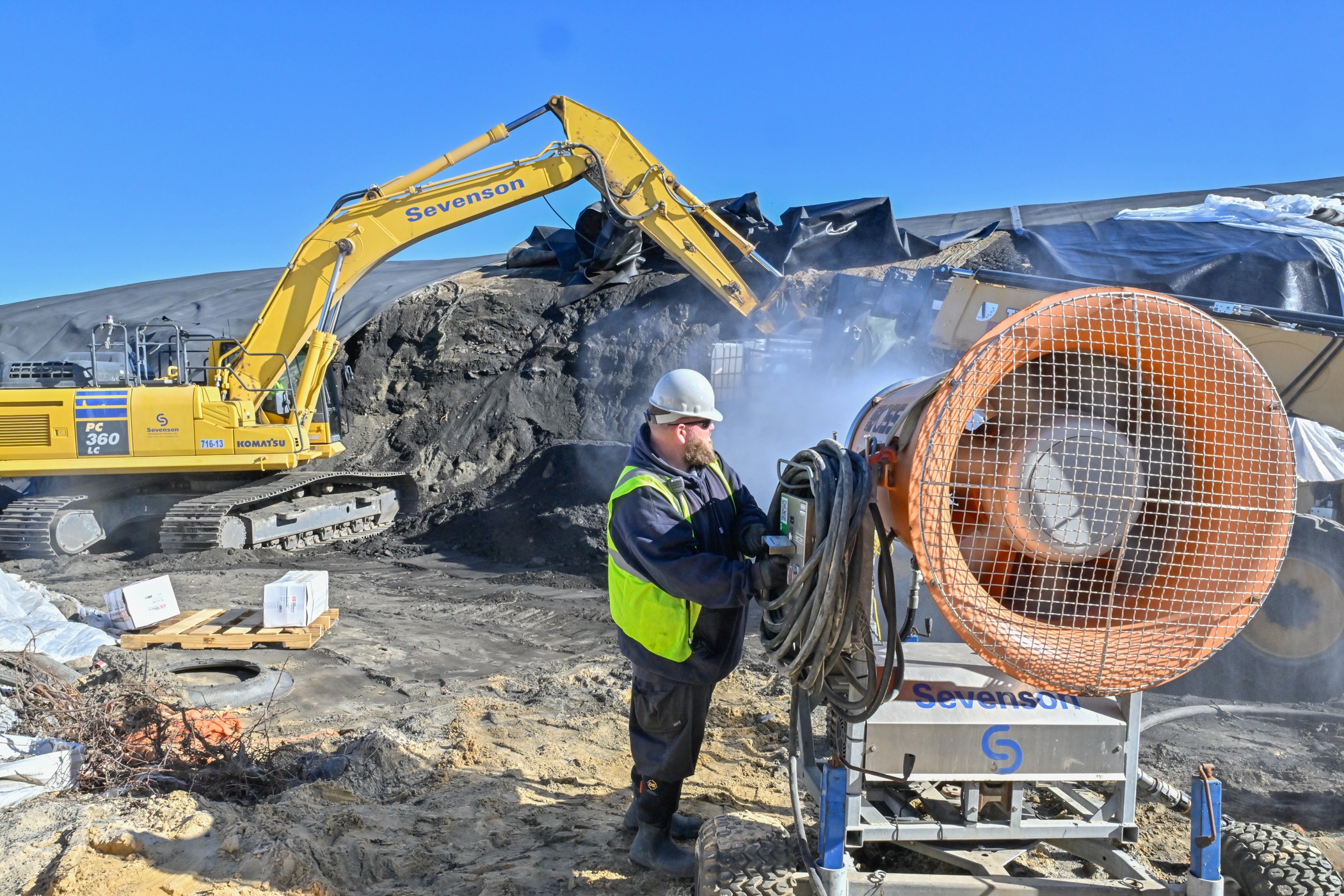
The Franklin Slag Pile sits on a 4-acre parcel and contains about 68,000 cubic yards of slag — a stony byproduct of metal smelting — enough to fill over 20 Olympic swimming pools. The cleanup process began in July after years of designing and planning. But treating, excavating and removing the hazardous material without exposing the area to contaminants will require a carefully executed cleanup process, as the site is just blocks from the Delaware River on one side and residents on the other.
Smelting is the process by which a usable metal is obtained from heating ore to a certain melting point. From 1950 to 1999, MDC Industries operated the site, processing slag from the neighboring Franklin Smelting and Refining Corp. and selling it for use in sandblasting and construction materials.
Before the EPA became involved with the site in 2000, slag frequently migrated off-site and coated sidewalks, roadways and storm drains, which empty directly into the Delaware River. In 2000, sampling revealed high concentrations of various metals in the air near the pile, including lead. The site was added to the Superfund list in 2002 and is owned by Franco Realty, based in New Jersey, according to Andrew Haneiko, EPA remedial project manager.
“For more than 20 years, the priority was keeping this contaminated material contained,” Haneiko said in a statement. “Now, we’re taking the next step by removing it for good.”


